

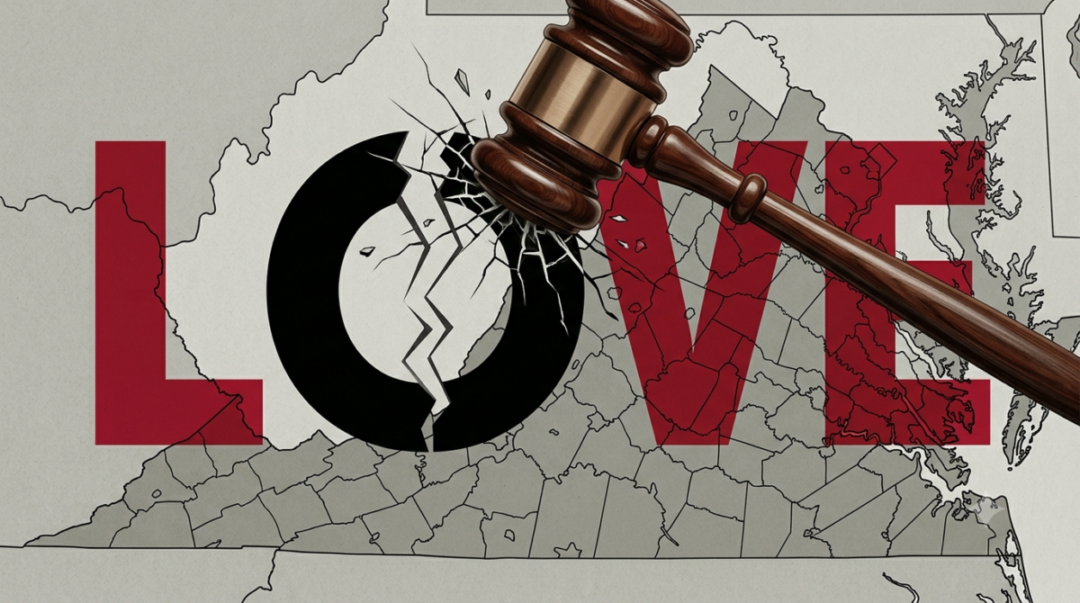
June 12, 1967. Loving v. Virginia was decided by the Supreme Court. My aunt Francis went to school with Mildred Jeter and remembered the film crew passing her home during the filming of Loving. For a while, my stepfather went to Saint Stephens Church, where the Lovings are buried, and their youngest daughter has been to our house for a cookout. I often forget how many of the fights for the promises of the Constitution have been won in my lifetime.
I continue with what I love about these United States: the pursuit of the ideal that all men are created equal, as stated in the Declaration of Independence, despite evidence to the contrary. Thomas Jefferson wrote “all men are created equal,” yet enslaved more than 600 people during his lifetime.
That same hypocrisy reached into who could marry whom.
Virginia’s marriage laws, dating to the 1691 “Act for Suppressing Outlying Slaves”, denied that right based on race. The Fourteenth Amendment promised equal protection and due process in 1868; Virginia and fifteen other states spent the next 99 years writing laws that said otherwise.
I love that the Supreme Court agreed unanimously, in Loving v. Virginia, that “the freedom to marry has long been recognized as one of the vital personal rights essential to the orderly pursuit of happiness by free men.” Chief Justice Earl Warren wrote those words for a unanimous Court.
Loving affirmed equality only for race, leaving the same hypocrisy intact for whom one may marry by sex. In the essay that follows, I trace who Americans marry today. In doing so, I honor my maternal grandmother, who was white and Native American, yet lived as a Black woman and married a Black man.
Love and Marriage
In 1968, one year after Loving, only 20% of Americans told pollsters they approved of interracial marriage; public approval did not reach a majority until 1997 and now stands above 90%. Responses to polls do not equate to action.
Black–white marriage specifically remains rare. In 1950, over a third of women in out-group marriages were white women married to Black men (34.9%). In 2024, that pairing had fallen to 4.5% (see Table 1). As immigration increased, Hispanic and Asian women married to white men also increased and became dominant pairings. Black and Native women’s interracial marriages remain numerically small and are predominantly with white partners when they occur.
Table 1. Interracial marriages: Women
Source: Calculations by the Women’s Institute for Science, Equity and Race using Decennial census 1950–1990; ACS 2000, 2010, 2019 and 2024. www.ipums.org
Before the 1965 Immigration Act, white women marrying Black men, and later Asian women marrying white men, were the most common pairings (see Table 2). Since 1980, however, the inter-ethnic pairing for women in every census has been a Hispanic woman married to a white man (see Table 3).

Source: Calculations by the Women’s Institute for Science, Equity and Race using Decennial census 1950–1990; ACS 2000, 2010, 2019 and 2024. www.ipums.org
Table 3. Interracial and inter-ethnic marriages: Women
Source: Calculations by the Women’s Institute for Science, Equity and Race using Decennial census 1950–1990; ACS 2000, 2010, 2019 and 2024. www.ipums.org
For Hispanic women, interethnic marriages have increased (see Table 4). However, endogamy remains the dominant pattern; approximately 75% of Hispanic women in 2024 were married to Hispanic men. Only one in four crosses the ethnic boundary for marriage. Separating “same ethnicity” from “same race” allows the data to reflect how shared cultural origins drive marriage patterns, independent of racial classifications.
Equality for Whom?
Mildred Loving was Native American and Black, much like my maternal grandmother. Yet the law collapsed her identity into a single category to criminalize her marriage.
Fifty-nine years after Loving, true equality still depends on how the law and society see you. I am committed to utilizing data to increase the visibility of Asian, Black, Hispanic, Indigenous American, and Multiracial women, with the hope that our policies finally honor the equality promised in the Constitution.
Rhonda V. Sharpe is the president and founder of the Women’s Institute for Science, Equity and Race. Her research focuses on gender and racial inequality, the diversity of STEM, and the demography of higher education.