

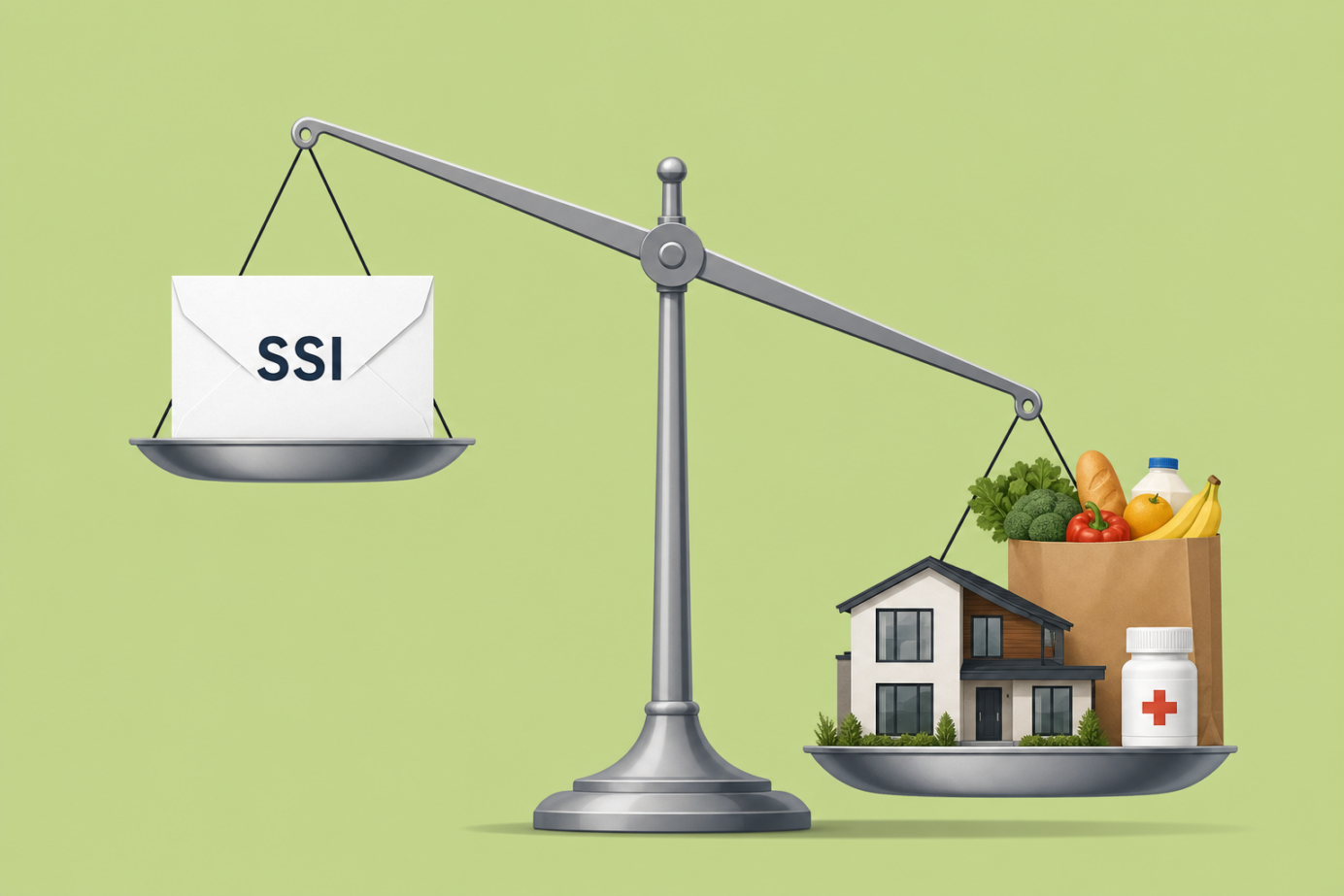
December 3rd was International Day of Persons with Disabilities, which recognizes visible and invisible disabilities and is a reminder that inclusion isn’t optional. This global observation highlights the barriers that prevent many people with disabilities from fully participating in social and economic activities. These challenges overlap with WISER’s focus on the economic well-being of Asian, Black, Hispanic, Indigenous American, and Multiracial women. But as a nation, the U.S. risks falling behind on disability support. A proposed rule change by the Social Security Administration (SSA) aimed at reducing spending could impact eligibility requirements for two types of income support for people with disabilities. The first is Social Security Disability Insurance (SSDI), which provides monthly benefits to workers with severe disabilities (and some of their family members) who have paid into the Social Security system. The second is Supplemental Security Income (SSI), a means‑tested income support for people with disabilities and older adults who have very low income and resources, regardless of their work history. The proposed changes threaten to reduce vital income supports for women with disabilities, especially those in marginalized communities. Here’s what you need to know.
Low Pay, High Poverty, Same Story
Changes to these program requirements could reduce the number of people currently eligible and increase burdens for women with disabilities, who are already overrepresented in low-paid jobs and face higher rates of poverty. One report estimated that reducing SSDI benefits by 10% would result in approximately 500,000 people losing SSDI eligibility within 10 years, resulting in roughly $82 billion in denied benefits.
So, who relies on SSDI and SSI the most?
Table 1 presents the racial and ethnic distribution of SSDI recipients, along with their average benefits. SSDI benefits are calculated based on lifetime earnings and contributions to Social Security through payroll taxes. Workers who earned more during their careers typically receive higher benefits upon disability. This earnings-linked structure means SSDI benefit differences across racial groups actually reflect underlying labor market inequities: occupational segregation, wage gaps, and employment discrimination accumulated over recipients’ working lives.
Black women comprise 18% of SSDI recipients but only about 14% of the U.S. population, indicating they experience work-limiting disabilities at elevated rates (see Table 1). Asian women (1% of recipients) and Indigenous women (1%) represent the smallest shares of SSDI recipients. Hispanic women (11%) and Multiracial women (3%) also show lower representation relative to Black women.
Table 1. Share of Women on SSDI and Average SSDI Benefit by Race/Ethnicity
Average SSDI benefits reveal the wage gap in action. Indigenous women receive the highest average SSDI benefit at $17,084 annually, while Asian women receive $16,437. Black women receive $14,322, and White women receive $14,809, similar amounts reflecting comparable lifetime earnings, despite occupational and sectoral differences. Hispanic women ($13,532) and Multiracial women ($12,507) receive substantially lower average benefits, directly reflecting lower lifetime earnings due to persistent wage gaps and occupational concentration in lower-paid work. We aren’t seeing program failure here; these benefit differences are accurate reflections of systemic wage discrimination that followed these women throughout their working lives.
Understanding SSI: Poverty Is the Defining Feature
Table 2 reveals a troubling picture. Since SSI is means-tested, it requires beneficiaries to have limited income and assets regardless of work history or disability severity. SSDI eligibility is based on work contributions, while SSI eligibility is determined by financial need. This fundamental distinction makes SSI data a direct measure of economic vulnerability among populations with disabilities. SSI makes up 59% of the SSDI benefit for Asian and White women, 58% and 56% for Hispanic and multiracial women, and 61% for Black and Indigenous women, indicating how low lifetime wages were for many women with disabilities and how deeply economic insecurity persists regardless of a full work history.
Black women comprise 20% of SSI recipients, even more overrepresented than in SSDI, despite representing only 14% of the population. Hispanic women make up 16% of SSI recipients. Asian women comprise 4% of recipients, Indigenous women 1%, and Multiracial women 3%. Because SSI requires recipients to be poor to qualify, these percentages directly demonstrate that Black and Hispanic women with disabilities experience poverty at disproportionately high rates. You cannot receive SSI unless you meet strict income and asset limits; the program’s structure guarantees that overrepresentation in SSI indicates measurable poverty.
Table 2. Share of Women with Disabilities on Social Security Insurance and Average Benefit
SSI benefits are inadequate. The maximum federal SSI benefit is $967 per month ($11,604 annually), yet the 2025 federal poverty guideline for a single person is $1,304 per month ($15,648 annually). These benefits ensure that recipients live on $4,000 per year below the official poverty line. Average benefits across racial and ethnic groups, Black women ($8,731), Hispanic women ($7,896), Multiracial women ($6,945), Asian women ($9,744), Indigenous women ($10,394), and White women ($8,810), all fall well below what’s needed for essentials.
The variation in average benefits among SSI recipients does not reflect differences in “need” or “worthiness” but rather differences in living arrangements and state supplementation. Unlike SSDI, where work history determines benefit amounts, SSI benefits are reduced if you live with family members who provide food or shelter, if you receive any other income, or if you live in a state without supplemental benefits. These program mechanics mean that variations in average SSI benefits across racial groups likely reflect differences in housing stability and family support structures, not differences in the severity of disability or deservingness.
SSI and its rationing of inadequate benefits institutionalize poverty. Because every SSI recipient lives below the poverty line by program structure, and because Black women (20% of recipients) and Hispanic women (16% of recipients) are overrepresented in SSI, these women bear the brunt of government-enforced poverty. Asian women (4%), Indigenous women (1%), and Multiracial women (3%), while smaller shares, face the same poverty trap inherent in SSI’s design.
SSI’s strict asset limits (typically $2,000 for individuals) and benefit reductions for earned income create perverse incentives against work, savings, or family financial support. Recipients cannot accumulate resources, cannot improve their situation through employment without losing benefits, and cannot accept help from family without reductions. Yes, proposed reductions to SSI and SSDI would lower benefit amounts, but more importantly, they would push already-impoverished women with disabilities deeper into deprivation. Black and Hispanic women, already overrepresented in these programs and living below poverty thresholds, would face catastrophic economic consequences.
SSI: Survival Isn’t Luxury
Lily S. Johnson is a former research assistant. She worked on projects focused on financial well-being and menstrual health.